
Every gambler eventually confronts the same uncomfortable question: am I actually good at this, or am I just being lucky? It is the psychological fault line that runs beneath every casino floor, every poker room, and every sportsbook account. And the answer matters far more than most players realize, because understanding where skill ends and luck begins is the single best way to avoid becoming a long-term donor to the industry.
I have spent the better part of a decade watching both sides of this equation. I have seen poker players who genuinely have an edge grind out a living, and I have seen slot streamers with 200,000 followers lose everything because they confused a hot streak with talent. This article is about drawing that line properly. For practical tips, check out mahjong slot.
Poker: The Only Mainstream Game With a Real Edge
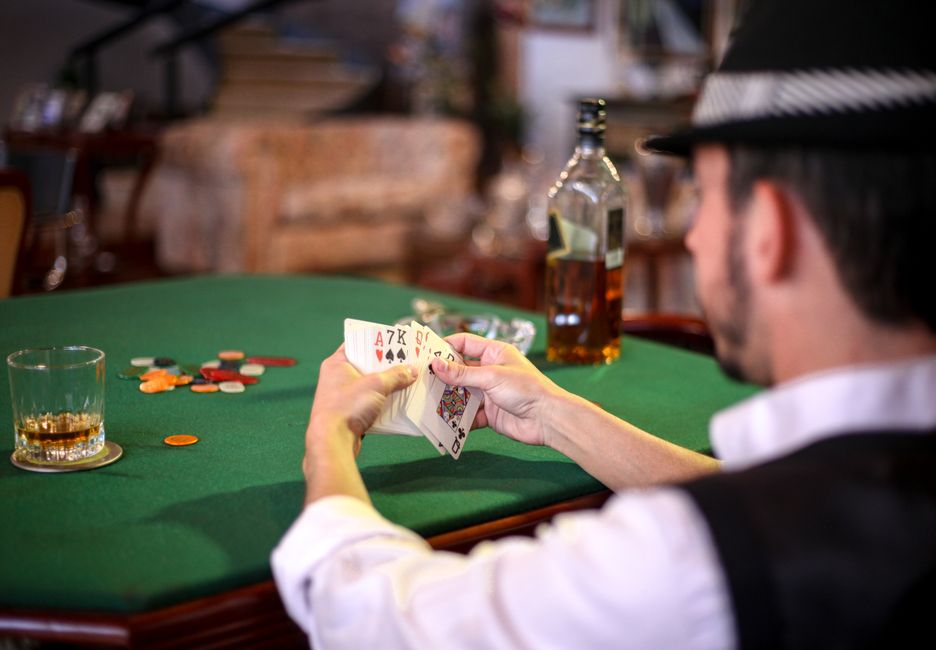
Let us start with the uncomfortable truth. Of all the products in the iGaming ecosystem, poker is the one where a skilled player can construct a demonstrable, repeatable advantage over opponents. Not the house, mind you. In poker you are not playing the casino, you are playing other humans, and the casino simply takes a rake, typically between 2.5% and 10% of each pot depending on stakes and venue.
What separates winning players from losing ones is not mystical reading ability. It is volume, discipline, and a willingness to study. A winning 2/5 no-limit hold'em player might earn 5 to 10 big blinds per hour, which sounds modest until you realize that over 1,500 hours a year that is $37,500 to $75,000 before expenses. That is a real job, and it is built on genuinely predictable edges.
- Positional awareness accounts for a huge chunk of any win rate. Playing fewer hands from early position is boring advice, but it works.
- Bankroll management separates the survivors from the casualties. A standard rule is 20 buy-ins minimum for cash games, 100 buy-ins for tournaments.
- Range analysis beats soul-reading. Modern solvers have shown that most intuition-based plays are simply wrong.
None of this makes poker easy. It makes it possible. That distinction matters enormously.
Slots and the Myth of the Hot Machine
Here is where a lot of people get upset with me. There is no skill in slots. None. Zero. The outcome of every spin is determined by a random number generator, and the only variable you control is your bet size and when you stop.
I have watched grown adults spend hours tapping a screen because a particular slot was "due." This is the gambler's fallacy dressed up in a shiny video bonus, and it is costing people fortunes. A slot machine with an RTP of 96% pays back 96 cents on the dollar over millions of spins. That 4% edge is the house's, and it is relentless. Over 10,000 spins on a $1 bet, a player is statistically expected to lose $400. Ten thousand spins at a fast pace takes maybe 12 hours.
The only legitimate strategy with slots is choosing machines with higher RTPs and avoiding ones with atrocious payback percentages. Some regulated markets publish RTPs, and the difference between a 94% and a 97.5% machine is enormous over time. That is not skill, it is informed shopping.
Sports Betting: Where the Sharp Money Lives
Sports betting occupies a strange middle ground. The vast majority of bettors are recreational and lose to the vigorish, typically a 4 to 5 cent line on either side of an even matchup, which translates to a house edge of roughly 2 to 5 percent. But a small minority of bettors are genuinely profitable.
These are the sharps. They do not win by picking winners; they win by finding prices that are wrong. A sharp bettor does not care whether the Lakers win; they care whether the Lakers are priced at +3 when they should be +2. Over hundreds of bets, small pricing inefficiencies compound into profit.
- Sharp bettors track line movement obsessively and often bet early, before the market adjusts.
- They stake according to edge size, not gut feeling. A flat 1 to 2 percent of bankroll per play is common.
- They accept that losing streaks are inevitable and do not chase them.
The rise of same-game parlays and prop bets has actually made this easier in one sense, because the market is fragmented. It has also made it easier for casual players to burn through their bankroll on high-margin novelty markets that carry enormous house edges. A same-game parlay with four legs can carry a hold well above 20 percent.
Blackjack, Video Poker, and the Experts' Games
If you want to reduce the house edge through actual learned skill, blackjack and video poker are your best bets outside of poker. A blackjack player using perfect basic strategy can cut the house edge down to roughly 0.5 percent on a typical 6-deck, dealer-stands-on-soft-17 game with favorable rules. Card counting can theoretically push a player into positive expectation, but modern casinos are extremely good at catching counters, and the practice requires a bankroll and temperament most players lack.
Video poker is more accessible. Games like 9/6 Jacks or Better return 99.54 percent with perfect play. That is a razor-thin house edge of 0.46 percent, and with casino comps and free play, a disciplined player can occasionally flip the math in their favor. But the keyword here is perfect play. Every incorrect hold decision chips away at that return, and most casual players give back a percent or two without realizing it.
The Psychology That Undermines Everything
Here is the part nobody wants to hear. Even in games with skill, most players lose because of how they behave, not how they calculate. Tilt is the great equalizer. A poker player who wins at 4 big blinds per hour for six hours and then punts three buy-ins in a tilt-driven session has erased a week of grinding.
The same applies to betting. Chasing losses is the primary mechanism by which recreational bettors turn a losing month into a losing year. Understanding variance is not optional; it is the actual game. A 55 percent win-rate bettor will have stretches of 30 or 40 bets where they lose money. If that fact makes you angry or desperate, you have already lost.
- Set strict session loss limits and honor them without exception.
- Track every bet and every session. Data does not lie; memory does.
- Never play when tired, intoxicated, or emotionally volatile.
- Separate gambling money from everything else, entirely and permanently.
The Bottom Line
If you want to participate in iGaming with any hope of not losing your shirt, you need a clear-eyed map of where skill exists. Poker rewards study and discipline. Sports betting rewards pricing analysis, mostly for a small professional cohort. Blackjack and video poker reward flawless execution within narrow margins. Slots and most casino floor games will take your money at a mathematically guaranteed rate, and no amount of good vibes changes that.
The smartest players I know treat this distinction as a kind of religion. They play the games where they have an edge, they play them soberly, and they treat the rest of the industry with the respect it deserves, which is the respect you afford any well-designed machine built to make money from people who misunderstand it. That is not cynicism. It is just clarity, and clarity is the only thing that ever separated the winners from the statistics.